


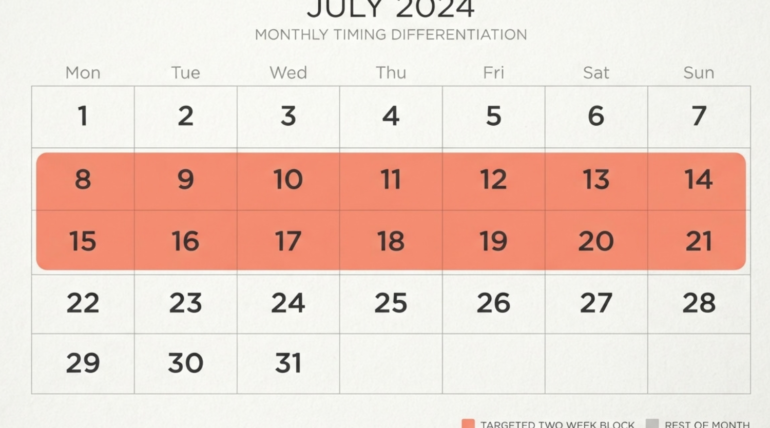
PMDD and major depressive disorder (MDD) can look almost identical symptom-for-symptom, but the key difference is timing: PMDD symptoms are cyclical, appearing in the week or two before menstruation and resolving within days of it starting, while MDD symptoms are persistent and unrelated to the menstrual cycle. The two conditions can also co-occur in the same person.
Why These Two Get Confused So Often
PMDD and MDD share a striking number of overlapping symptoms: low mood, hopelessness, irritability, fatigue, and difficulty concentrating all appear in both. A systematic review published in Journal of Affective Disorders Reports notes that this overlap is significant enough that PMDD is frequently misdiagnosed as MDD by healthcare professionals, and the reverse happens too: women with a cyclical pattern get treated for standard depression without anyone asking about the timing relative to their period.
The One Question That Actually Separates Them
Ask: Do the symptoms disappear for roughly two weeks each month, or are they there all the time?
- PMDD: Symptoms cluster in the luteal phase (the one to two weeks before your period) and improve substantially within a few days of menstruation starting. There’s a genuine symptom-free window most cycles.
- MDD: Symptoms persist for at least two weeks continuously and aren’t tied to cycle phase at all; they don’t reliably lift when your period starts.
This single distinction is the primary diagnostic tool clinicians use, more than the symptom list itself, precisely because the symptom lists overlap so heavily.
They’re Biologically Different, Not Just Timed Differently
It’s not just about when symptoms show up; the underlying biology differs too. Research summarized in the American Psychological Association’s review of PMDD found that, unlike many cases of MDD, women with PMDD tend to show normal functioning of the hypothalamic-pituitary-adrenal (HPA) axis (a stress-response system often disrupted in depression), along with biological markers more specifically tied to the serotonin system, and a genetic component that researchers have found to be distinct from major depression. In short: PMDD isn’t simply “depression that happens to show up before your period”; it appears to involve a different underlying mechanism tied to cyclical hormone sensitivity.
Yes, You Can Have Both, and It’s Common
PMDD and MDD aren’t mutually exclusive. A few things research has found about how they interact:
- Up to 70% of women with PMDD have at least one co-existing mental health condition, with depression among the most common, according to a diagnostic interviewing study on PMDD comorbidity published via NIH/PMC.
- One early study tracking women with PMDD found that 7 out of 8 went on to develop major depression within two years, suggesting PMDD may be a risk marker for later depression, not just an isolated monthly event.
- Women who have both conditions often notice their baseline depression worsens further during the luteal phase, which can make the cyclical pattern harder to spot underneath an already-depressed baseline.
This is part of why accurate diagnosis isn’t just an academic exercise: if you have both, treating only one often leaves the other symptom pattern unaddressed.
Why the Distinction Changes Treatment
Standard antidepressant protocols for MDD typically involve daily SSRI dosing, continued over months. PMDD often responds to a different approach entirely, including SSRIs dosed only during the luteal phase, a strategy with no equivalent in standard MDD treatment. Getting the diagnosis right determines which dosing strategy, and which therapy focus, actually fits what’s happening.
How to Find Out Which One (or Both) You’re Dealing With
The same approach used to distinguish PMDD from PMS applies here: prospective daily symptom tracking across at least two menstrual cycles, reviewed against DSM-5-TR criteria for PMDD (see our pillar guide to PMDD for the full criteria). If your tracking shows symptoms present even during the days right after your period, that’s a signal to discuss MDD, PMDD, or both with a provider, not to guess based on symptoms alone.
Frequently Asked Questions
Is PMDD a type of depression? PMDD is classified in the DSM-5-TR as its own depressive disorder related to MDD in category, but distinct in cause, timing, and treatment response.
Can PMDD turn into major depression? PMDD doesn’t automatically become MDD, but research has found women with PMDD are at elevated risk of developing major depression over time, which is one reason ongoing monitoring matters even after a PMDD diagnosis.
Can you have PMDD and depression at the same time? Yes. This is common, and depressive symptoms in women with both conditions often intensify further during the luteal phase.
What’s the fastest way to tell PMDD from depression? Track whether your symptoms fully resolve for roughly two weeks each cycle. A true symptom-free window points to PMDD; continuous symptoms point to MDD.
Getting the Right Diagnosis Changes the Treatment Plan
If your lowest points always seem to line up with your cycle or if they don’t let up even when your period starts, that pattern is worth bringing to a psychiatric evaluation rather than managing alone.
Not sure if it’s PMDD, depression, or both? Talk to HerSpace Mental Wellness about a full evaluation that considers timing, history, and symptom patterns together.