



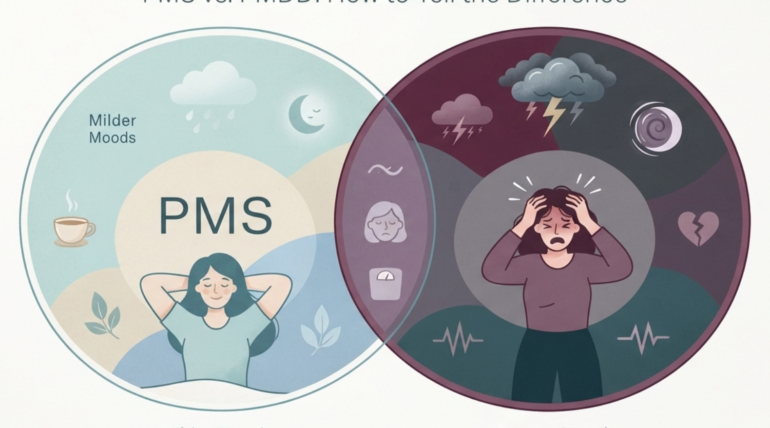
PMS and PMDD both happen in the week or two before your period. Still, PMDD is a distinct, diagnosable mood disorder, far more severe, more disruptive to daily functioning, and affecting roughly 3–8% of menstruating women, compared to the 20–30% who experience clinically defined PMS. The difference isn’t just intensity; it’s category.
Is PMDD Just Severe PMS?
Not exactly. PMS and PMDD share a trigger, the hormonal shift of the luteal phase, but they’re classified differently. PMS is considered a set of physical and emotional symptoms that are uncomfortable but manageable. PMDD is listed in the DSM-5-TR as a depressive disorder, on the same clinical footing as major depressive disorder or persistent depressive disorder, just with a cyclical rather than constant pattern. (For the full breakdown of PMDD’s diagnostic criteria and what’s happening hormonally, see our complete guide to PMDD.
Think of it less as “PMS turned up” and more as a different diagnosis that happens to share a trigger with PMS.
How Common Is Each One?
This is where the numbers make the distinction concrete:
- Some premenstrual symptoms: up to 90% of menstruating women notice at least one physical or emotional change before their period
- PMS (meeting clinical criteria): roughly 20–30% of women
- PMDD: roughly 3–8% of women of reproductive age
In other words, almost everyone experiences something premenstrually. A smaller group meets the bar for PMS. A much smaller group has PMDD specifically.
What Actually Separates the Two
| PMS | PMDD | |
|---|---|---|
| Primary symptoms | Bloating, breast tenderness, fatigue, mild irritability | Severe mood symptoms: rage, hopelessness, panic, marked mood swings |
| Functional impact | Uncomfortable, but daily life continues largely as normal | Significant disruption to work, relationships, or ability to function |
| Emotional intensity | Mild to moderate | Severe enough to resemble a depressive or anxiety episode |
| Classification | Gynecological/physical symptom cluster | Diagnosable depressive disorder (DSM-5-TR) |
| Diagnosis method | Based on reported symptoms and pattern | Requires prospective daily symptom tracking across 2+ cycles |
The clearest tell isn’t any single symptom; it’s whether the symptoms are disruptive enough to interfere with your ability to work, parent, or maintain relationships during that week, versus simply being unpleasant.
Can You Have Both?
Not exactly “both.” PMDD by definition includes many PMS-type physical symptoms (bloating, breast tenderness, fatigue) layered with severe mood symptoms. So if you have PMDD, you’ll likely also notice classic PMS symptoms; they’re part of the same episode, not a separate condition running alongside it.
Why Getting the Right Label Matters
Treatment approaches differ. PMS often responds well to lifestyle adjustments: diet, exercise, stress management. PMDD frequently requires clinical treatment: SSRIs (sometimes dosed only during the luteal phase), specific hormonal contraceptive formulations, or therapy addressing the severity of the mood symptoms. Treating PMDD as “just PMS” often means under-treating a legitimate mood disorder for years.
How to Find Out Which One You Have
The only reliable way to distinguish PMDD from PMS is prospective tracking, logging your mood and physical symptoms daily across at least two menstrual cycles, then reviewing whether the pattern meets DSM-5-TR criteria (at least 5 of 11 specific symptoms, occurring in the week before your period, resolving within days of it starting). This isn’t something to self-diagnose from a checklist alone; a psychiatric evaluation can confirm it accurately.
Frequently Asked Questions
Is PMDD more common than people think? Yes. Estimates suggest 3–8% of menstruating women meet full PMDD criteria, but the condition is widely under-recognized because its symptoms are often dismissed as “bad PMS.”
Can PMS turn into PMDD over time? PMS itself doesn’t develop into PMDD; they’re distinct diagnoses. However, PMDD symptoms can worsen over time or intensify during life transitions like perimenopause.
What’s the fastest way to tell if I have PMDD instead of PMS? Track your symptoms daily for two cycles and note whether mood symptoms are severe enough to disrupt work, relationships, or daily functioning. If they are, it’s worth a psychiatric evaluation rather than continuing to manage it as PMS.
Do PMS and PMDD show up on a blood test? No. Both are diagnosed by symptom pattern and timing, not by hormone levels; hormone levels are typically normal in both conditions.
Ready to Find Out Which One You’re Dealing With?
If your premenstrual week feels like more than PMS, if it’s affecting your work, your relationships, or how you feel about yourself, that’s worth a real evaluation, not more guesswork.
Not sure if it’s PMS or something more? Talk to HerSpace Mental Wellness about tracking symptoms and getting a proper evaluation.